T. 01246 819 970 | E. info@mpcsystems.co.uk
Pallet Racking
MPC Systems offers reliable, easy-to-install, and cost-effective adjustable beam racking. This versatile system provides direct access to every pallet and can be tailored to meet specific load, space, and handling needs using a wide range of uprights and beams.
Standard pallet racking offers safe and efficient storage for various goods, and our range of accessories (see pages 14–15) enhances flexibility and ease of use.
Download Our Brochure
Discover how our solutions can work for you. Download our latest brochure now.

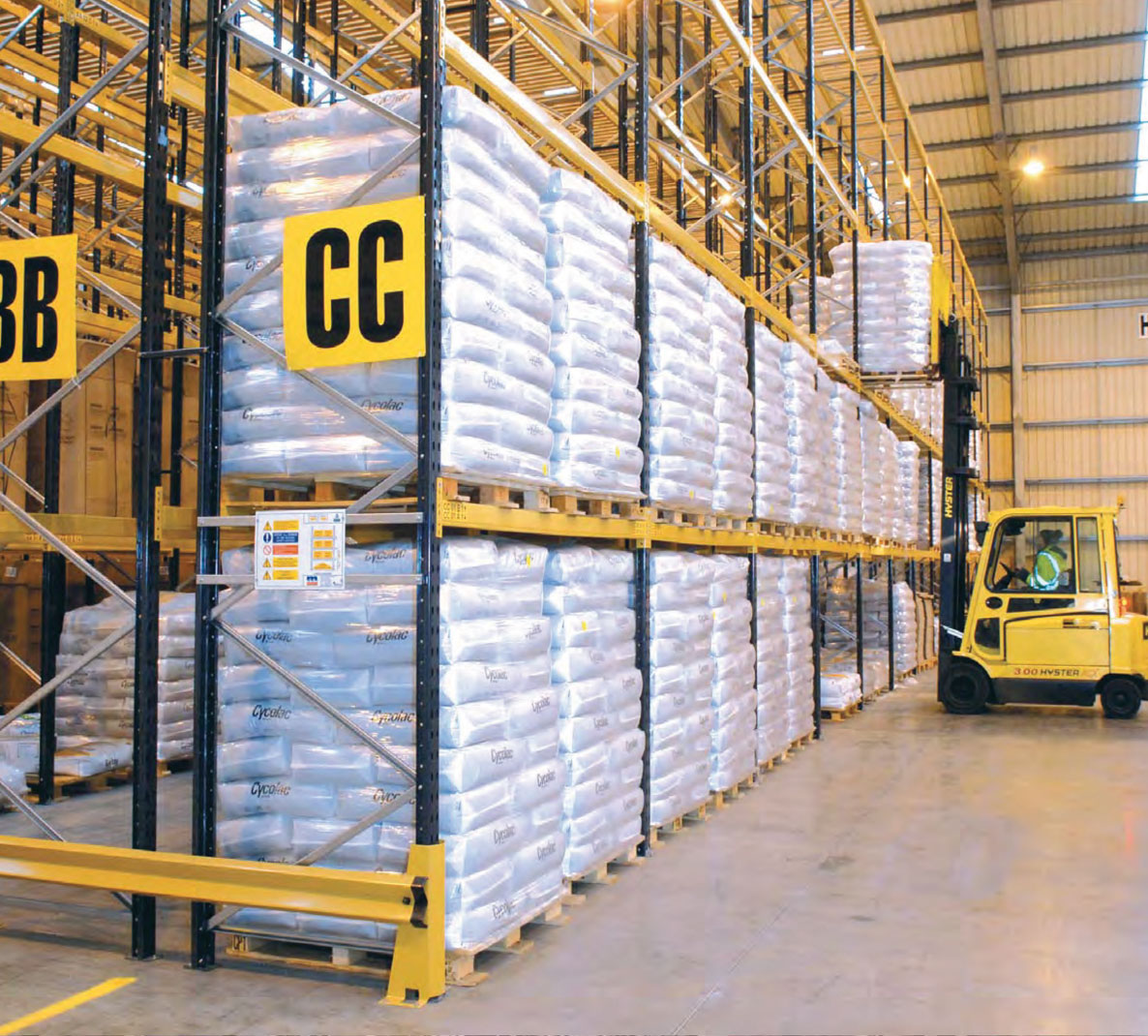
Wide Aisle Standard
Easily installed, cost-effective and versatile, wide aisle racking is the most widely used of pallet storage systems and allows direct access to each pallet stored.
With adjustable beams, racking can be re-configured to accommodate changes in the type of goods stored and wide aisles allow access by all types of truck, making specialised handling equipment unnecessary.
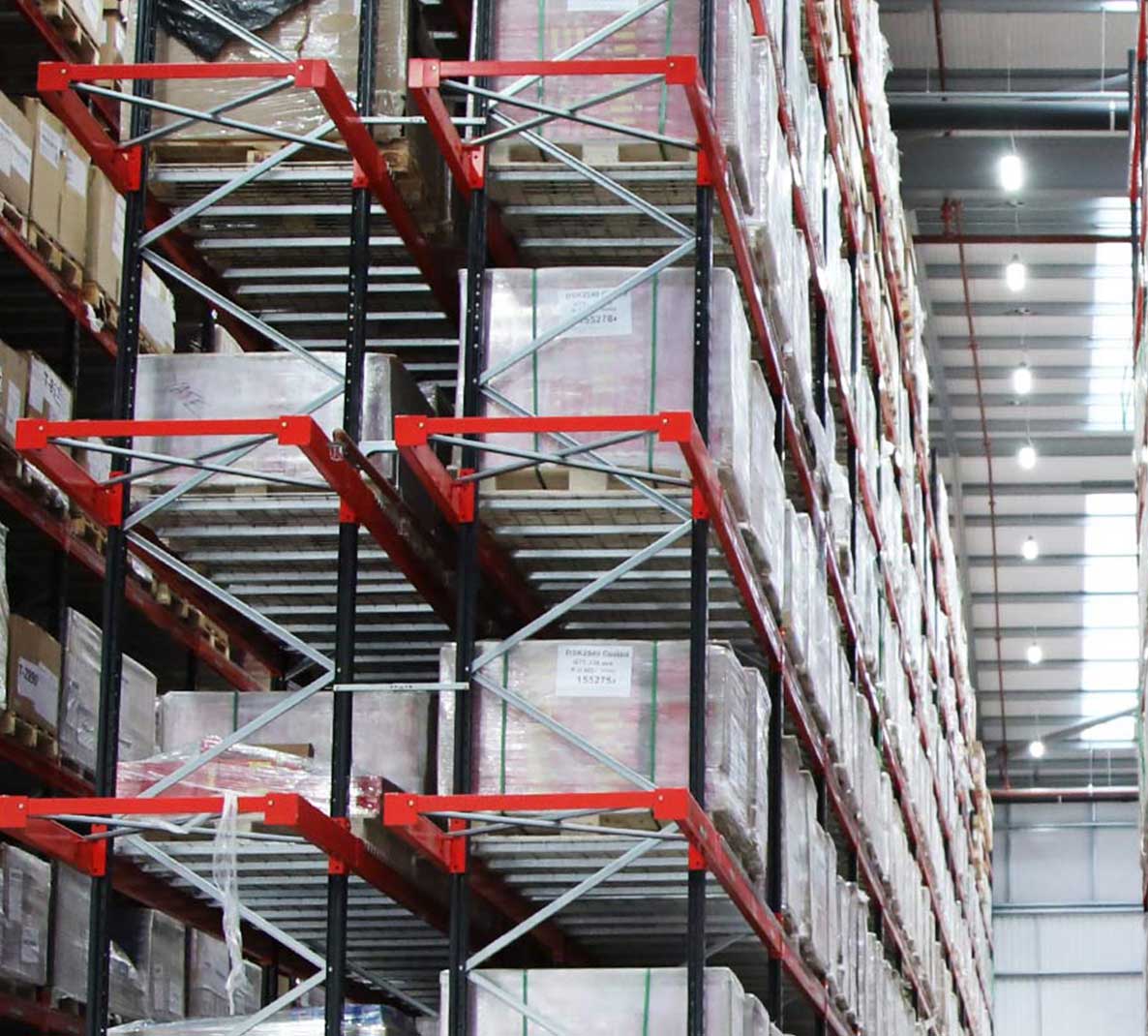
Narrow Aisle Solutions
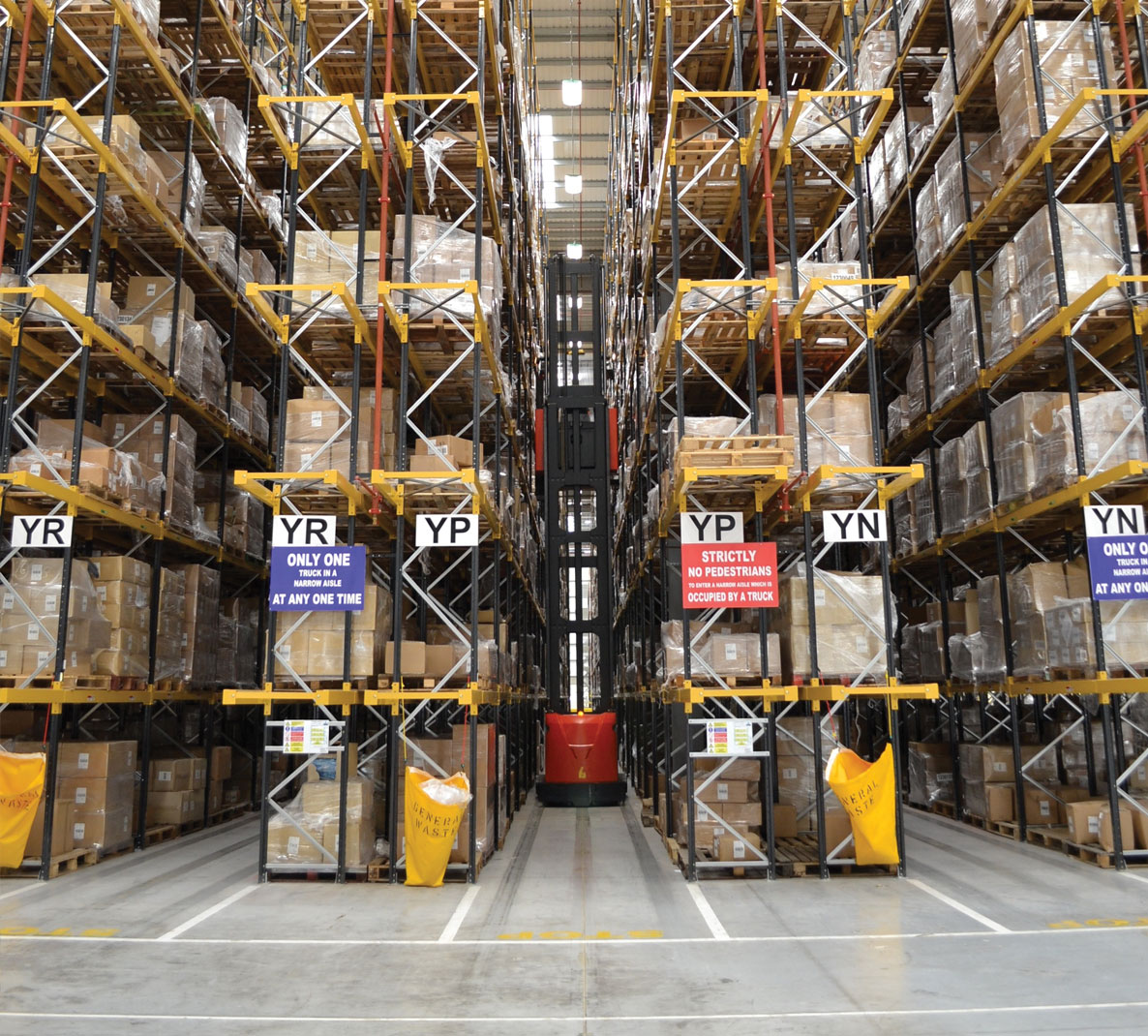
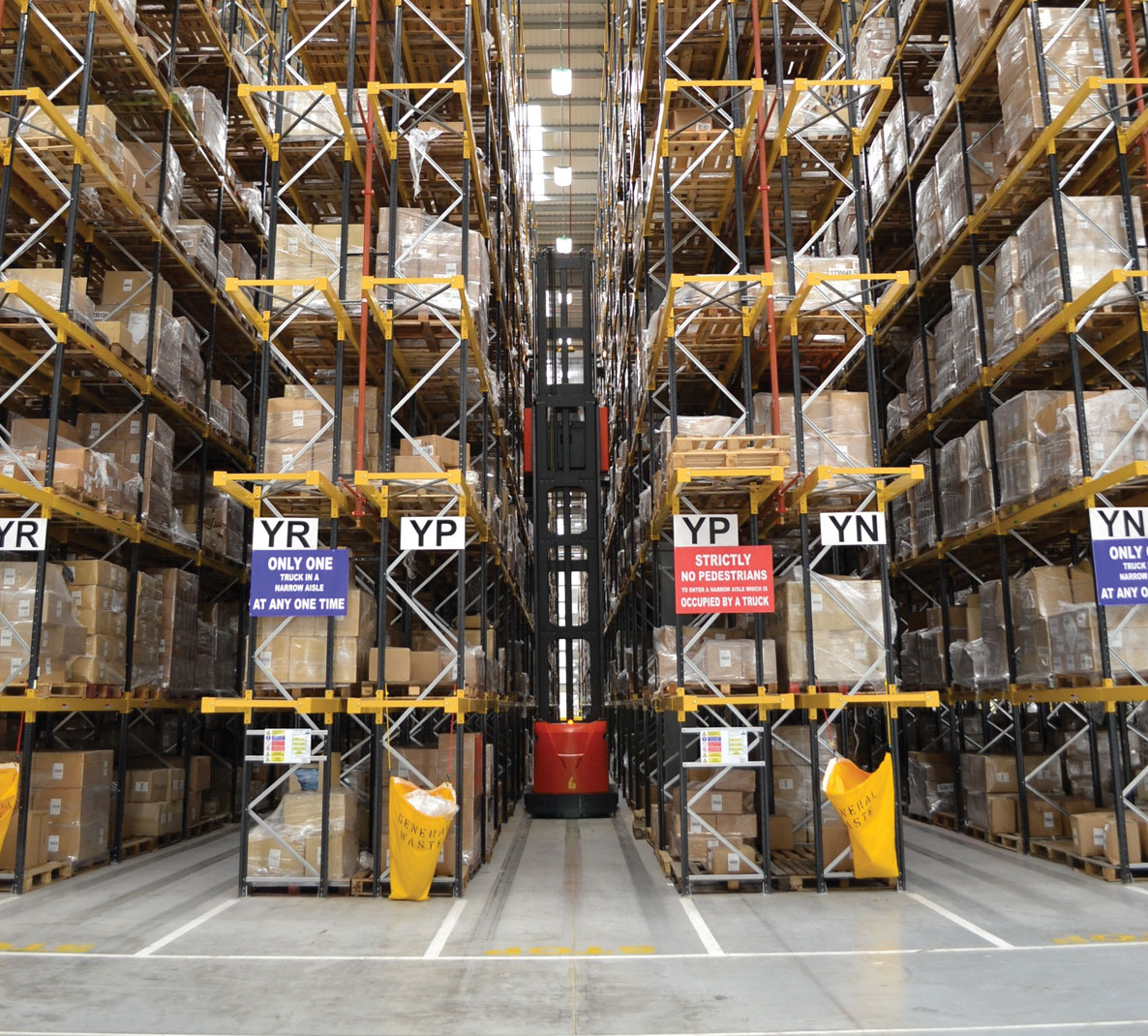
Narrow Aisle maximises floor space and stacking height by allowing forklifts to operate in narrower aisles. Using specialised ‘man-down’ or ‘man-up’ lift trucks, it ensures safe, efficient load handling. Floor-level guidance rails or wires enhance safety, reduce damage, and improve handling speed and accuracy.
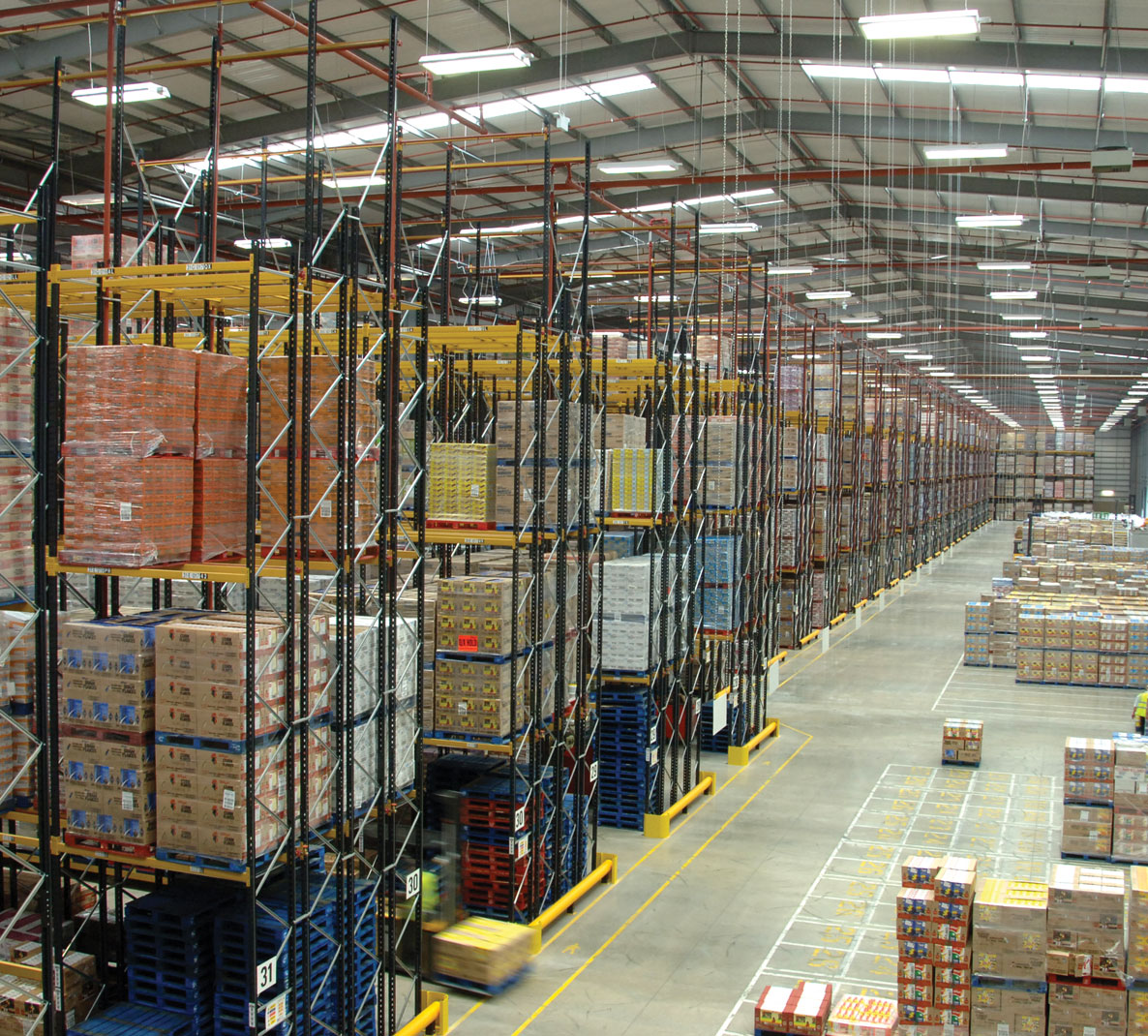
Double Deep
A variant on standard adjustable beam racking,
Double-deep racking, as the name implies, allows pallets to be stored two deep but still accessible from the same aisle.
By reducing the number of access aisles and using the space saved to accommodate additional racking, a Double-deep configuration provides a highly space-efficient storage system.
This first-in, last-out system, used with an efficient stock management system can offer the advantage of the increased storage density.
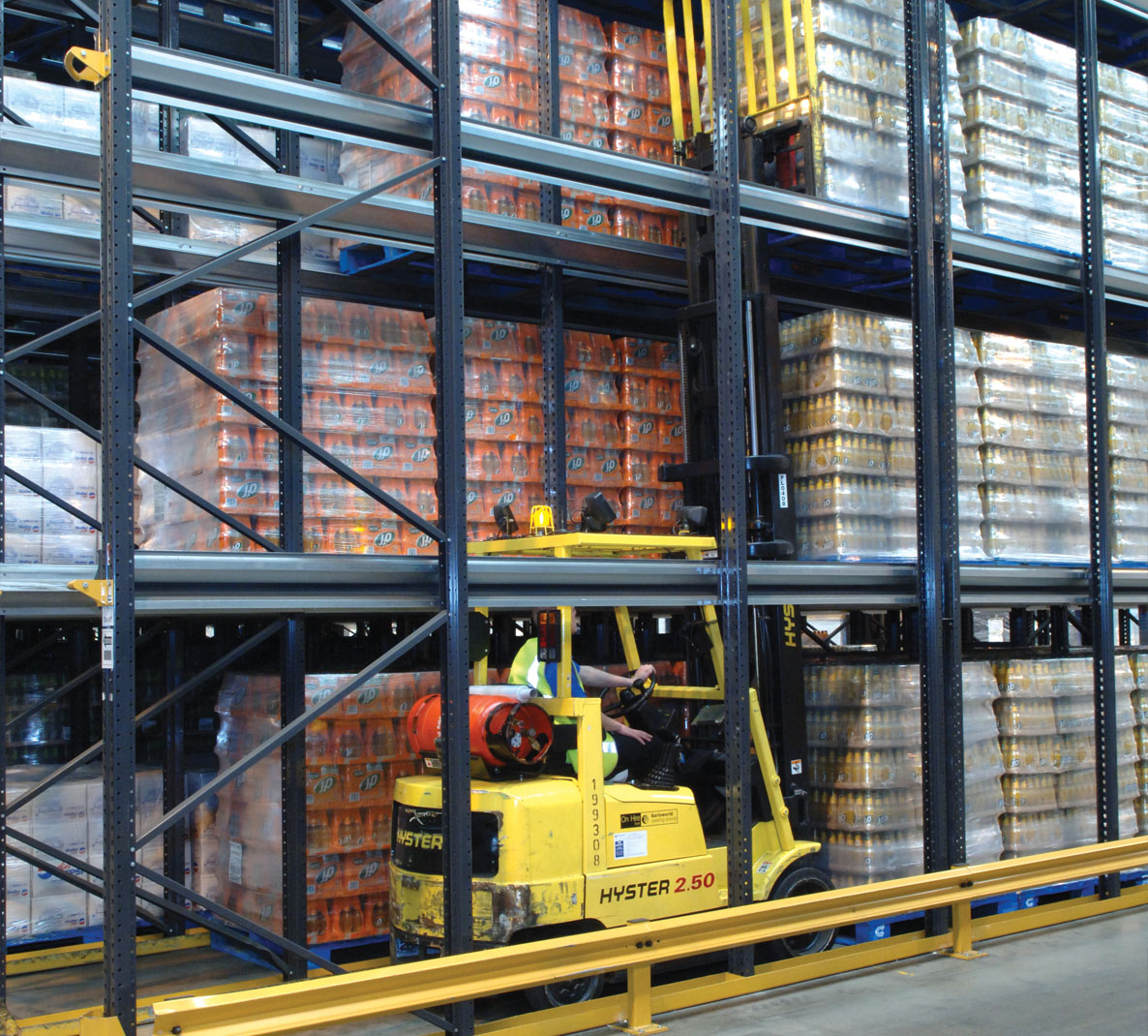
Drive In
Drive-in racking maximises space efficiency for palletised goods by eliminating access aisles, increasing storage capacity by 60-80% over conventional racking. Pallets are stored on guide rails, with forklifts entering storage lanes to load or retrieve goods. Access can be from one end (drive-in) or both ends (drive-through) for better stock rotation. With heights up to 11 metres, it fully utilises building space for maximum storage. An ideal solution for high-density storage without specialised handling equipment.
Carton Flow
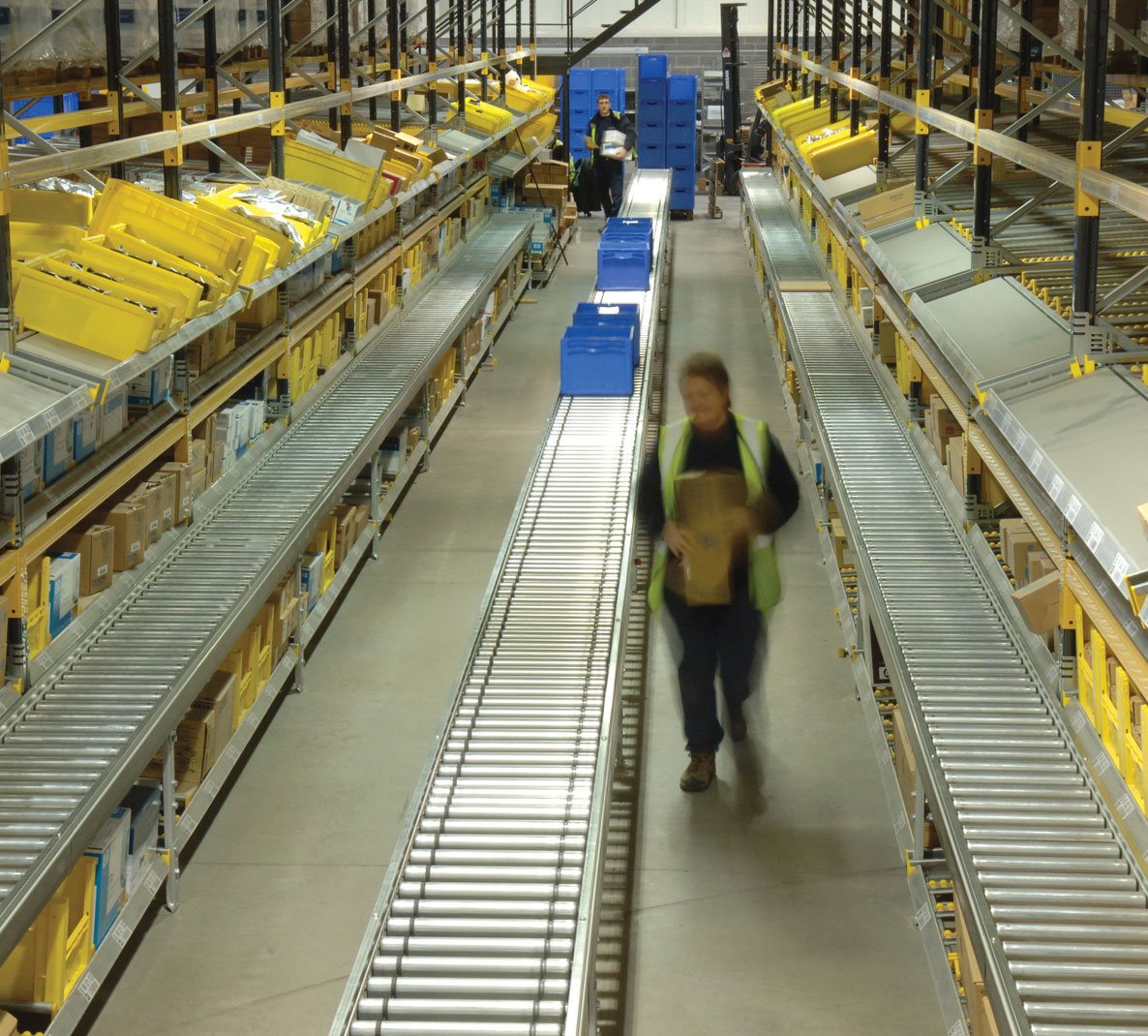
Carton live storage or ‘flow racking’ operates on the same principle as pallet live storage, but is used for stock which needs to be hand-loaded and picked.
Live storage systems reduce order picking times and help minimise errors, as not only are items presented precisely at the picking face, but effective management of the throughput and stock levels of goods can also be easily maintained.
Push Back
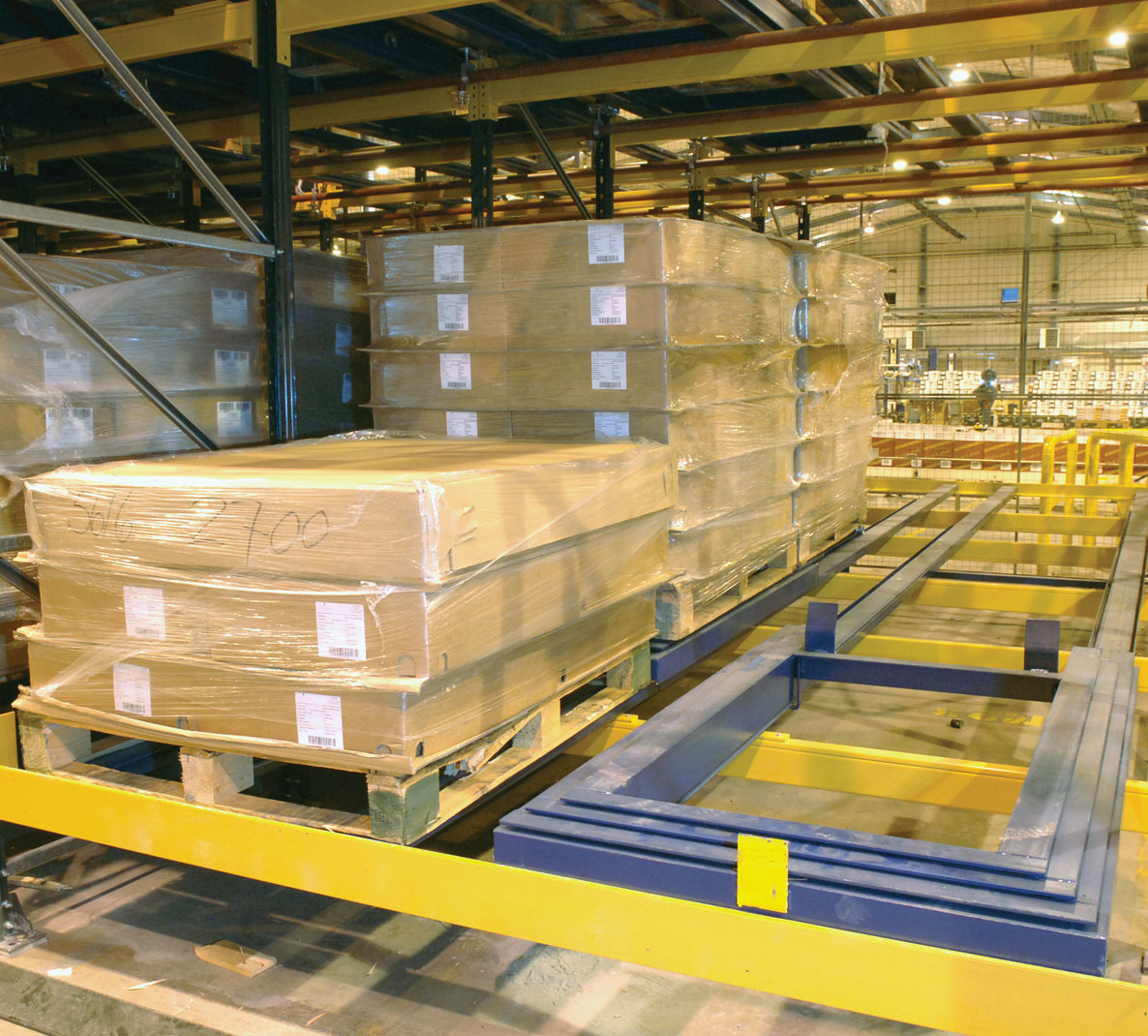
Dynamic Push-back racking maximises floor and cubic space, offering an efficient pallet storage solution. Pallets are loaded onto wheeled carts or rollers and pushed back along inclined beds, storing up to 4 deep on carts or 10 deep on rollers. As pallets are retrieved, the remaining ones move forward. Operating on a ‘first-in, last-out’ basis, it’s ideal for marshalling areas and bulk storage.
Pallet Live
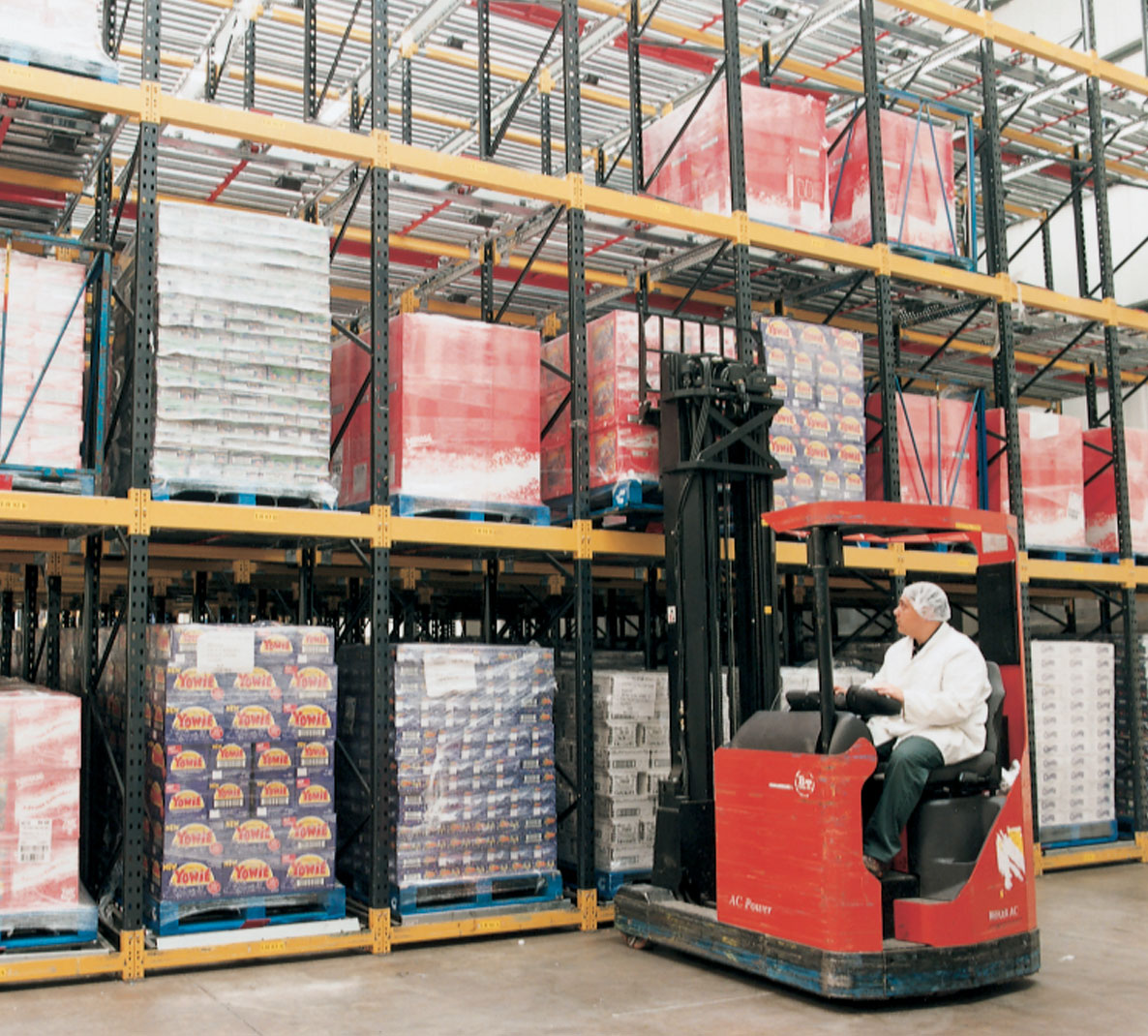
Working on a first-in, first-out basis, dynamic Live racking provides extremely high levels of storage density in a given area. Pallets are loaded onto dedicated lanes of inclined gravity rollers which are set at a fixed gradient. When a load is taken from the picking face, the next pallet rolls into position, with replenishment stock loaded at the opposite (upper) end of the lane.
Stock rotation is therefore automatic with the minimum
of forklift truck movements required to handle the flow
of goods.
Specialised
Whilst providing the ideal means of storing palletised loads, the versatility of the system means large, bulky or simply awkward to store items can be accommodated using the most accessible and space-efficient methods.
Combinations of standard components and accessories with specialised ‘bespoke’ items create successful solutions to what may initially appear to be the most difficult of storage problems.
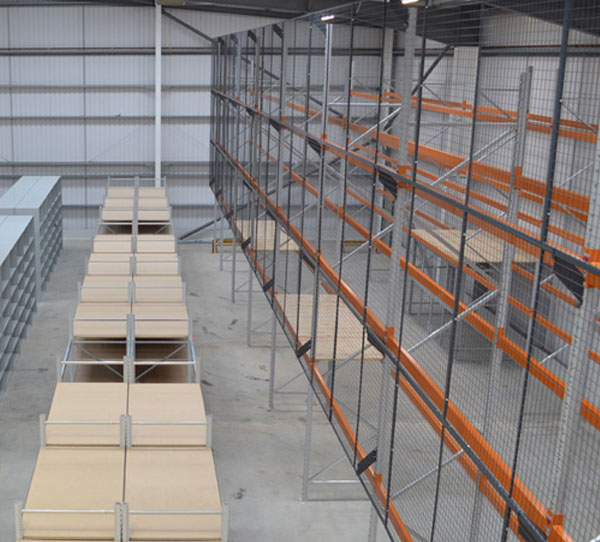
Raised platforms and ‘tiered’ systems also provide a cost-effective means of utilising the height of a building thereby maximising the storage capacity for a given floor area.
Storage Platforms
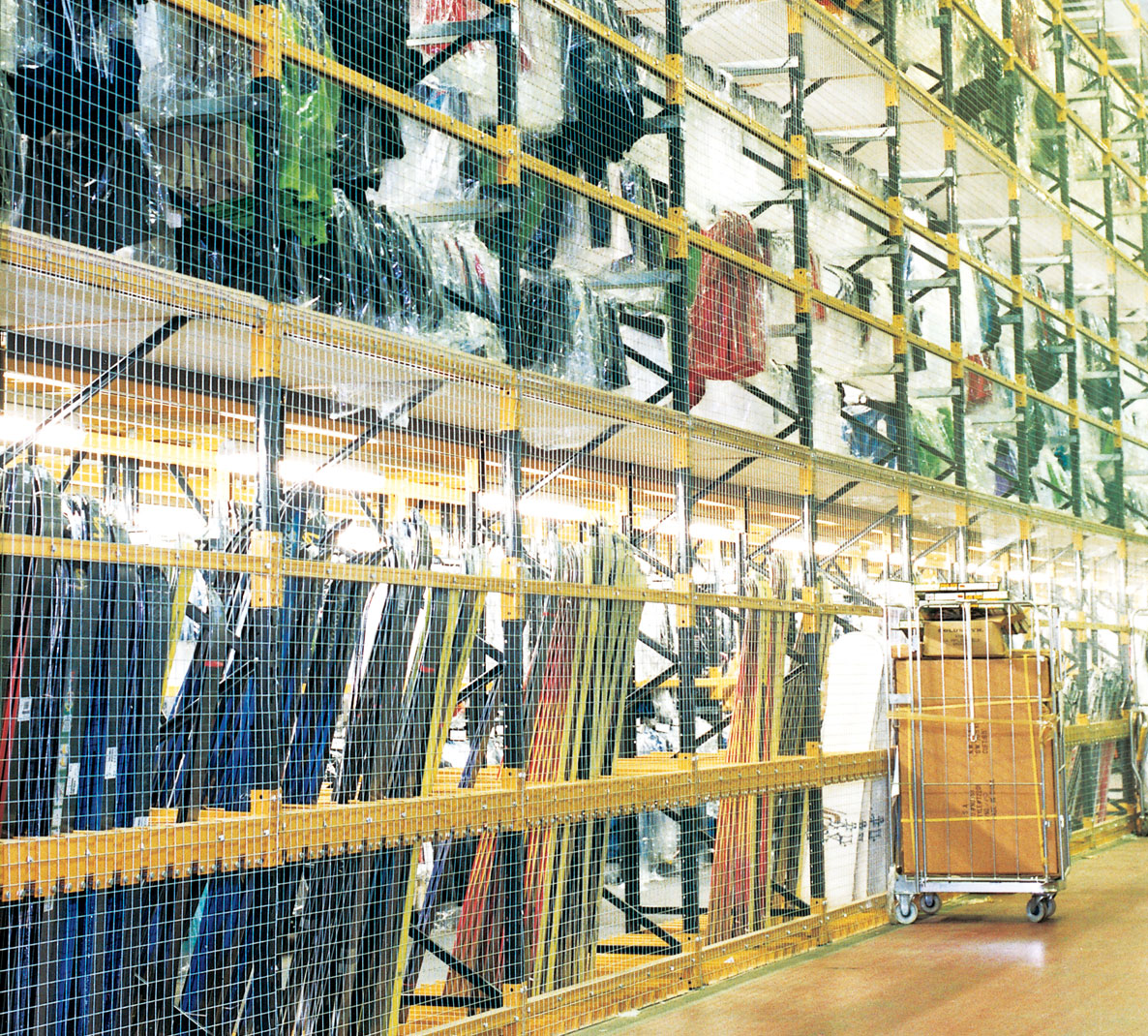
Maximise storage without expanding your footprint—build upwards! Raised platforms and tiered shelving double capacity by utilising vertical space. Featuring walkways, stairs, and safety rails, they’re ideal for storage or order picking, with conveyor integration for efficient dispatch. Built with Palletstor and Longspan shelving, they offer strength, versatility, and adaptable configurations.
Barrier
Barrier Rails have been developed to allow organisations throughout industry to protect equipment and facilities which are vulnerable to accidental fork truck damage. As well as protecting racking and shelving in busy warehouse or factory environments, Barrier Rails
segregate and protect forklift truck battery chargers, vending machines, conveyors, factory or warehouse
offices. They also serve as safety barriers in loading bays and to demarcate doorways and pedestrian areas.
Barrier Rails help companies comply with the requirements of current Health & Safety regulations - to make the working environment safer.
Racking Case Studies
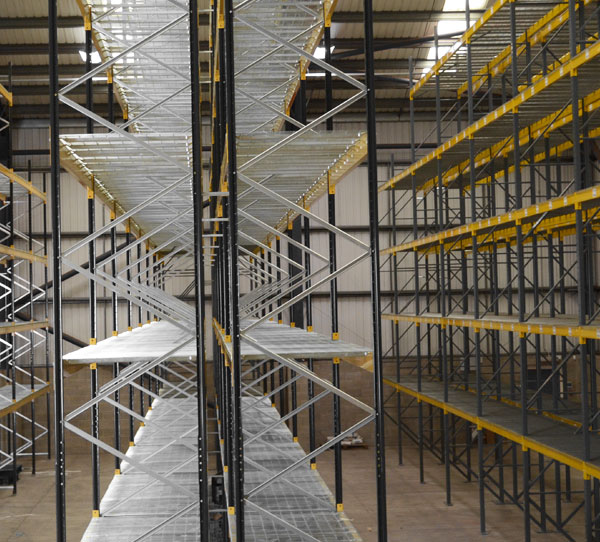
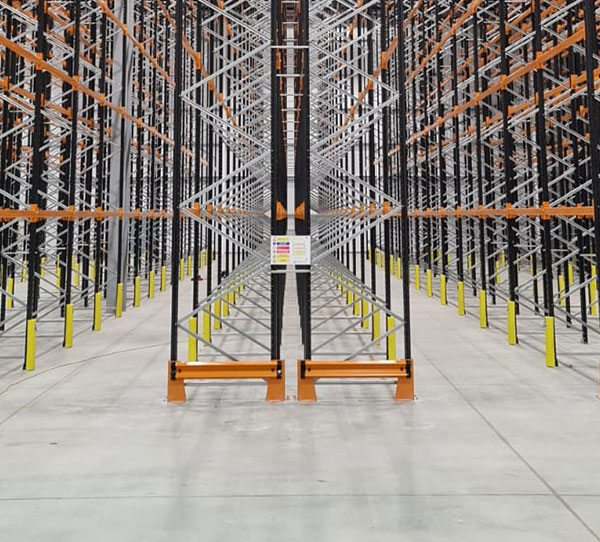
These examples represent a cross section of projects we have completed for our clients. Each project showcases our expertise in the manufacture and installation of our high quality systems.
CASE STUDY
CASE STUDY
CASE STUDY
MPC Systems (North) Ltd
Unit 11, Network Centre
Midland Way
Barlborough
Chesterfield
S43 4WW
Telephone: 01246 819 970
QUICK LINKS
OUR POLICIES
Copyright © 2026 MPC Systems.

All rights reserved.